Artisan: Little Things
Date: 2021
Intended Rooms: Servants’ Hall; Butler’s Pantry; Maids’ Bedroom; Housekeeper’s Bedroom
Dimensions: 70 x 45 mm; 2 ¾ x 1 ¾ inches; and smaller (height x width)
Inventory numbers: 2021.017 A (Mr Maroc); B (Houdini); C (Worm Charmers); D (Rubini); E (Human Nature); F (Royal Albert Hall); G (Maskelyne & Cooke); H (Female Christy’s Amazonian Scene)
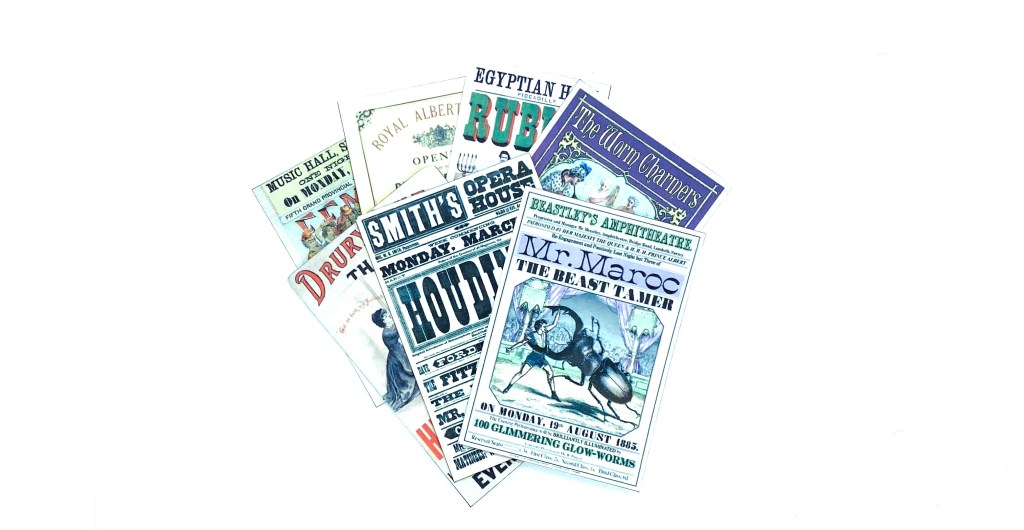
The servants at Quartermaine Hall like nothing better than to go up to London on their days off, and a visit to the theatre or music hall is a rare treat. This set of posters records some of their favourite events (some of which may not be all that historically authentic). Some are lying around in the servants’ hall while the more sensational events, of which the butler would doubtless disapprove, are stuck to the wall in the maids’ bedroom or passed surreptitiously from hand to hand among the footmen. The butler himself has preserved a poster from the opening of the Royal Albert Hall, not because he was able to go himself, but as a mark of respect for the Queen, and it hangs alongside Victoria’s portrait in his pantry. The housekeeper, in the privacy of her bedroom, has kept a more personal memento: a poster of a colourful show she saw in Shrewsbury with her beau as a young woman, just before going into service.
The posters include the following:
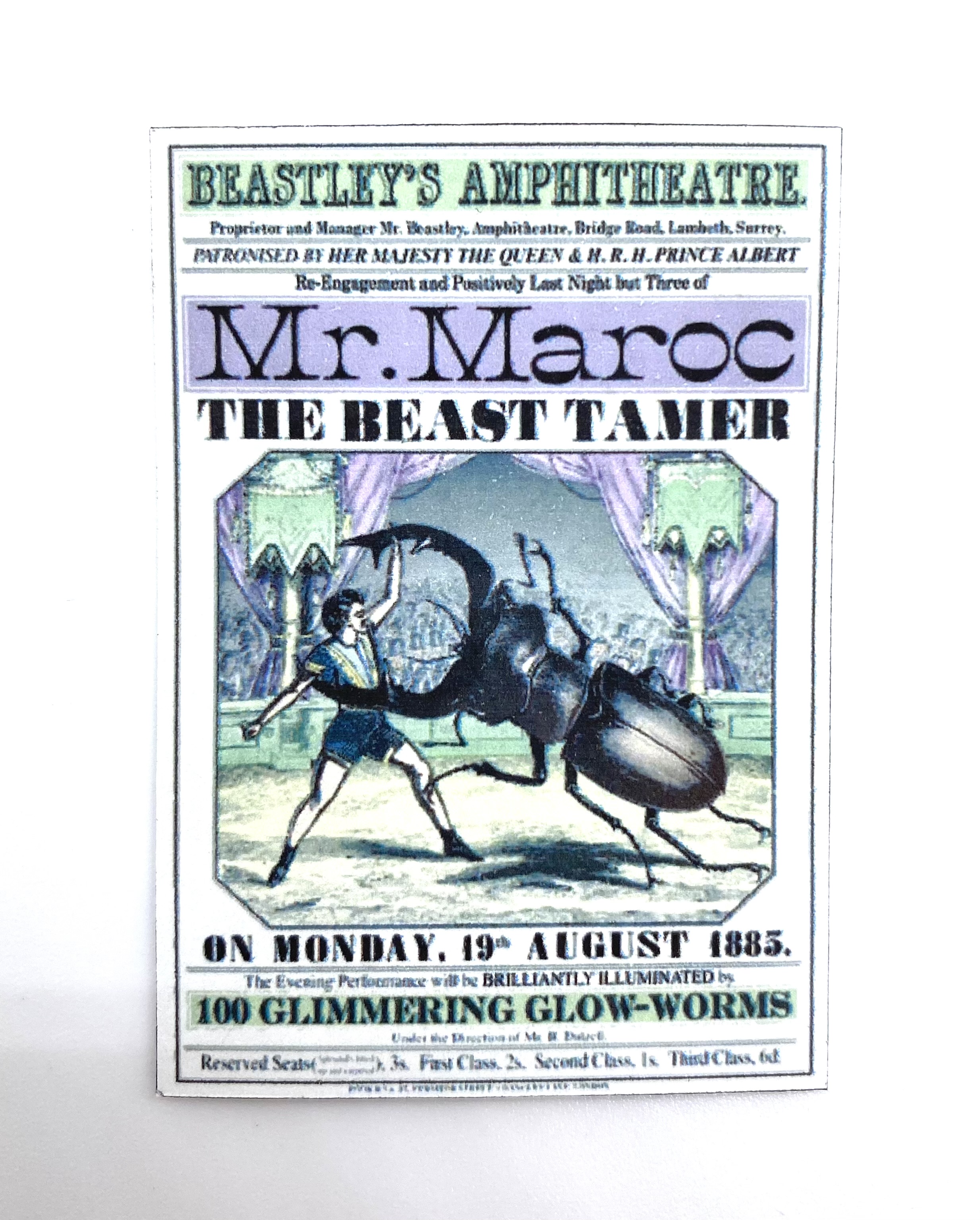
- Mr Maroc, The Beast Tamer, at Beastley’s Amphitheatre on 19 August 1885 (‘The exciting performance will be BRILLIANTLY ILLUMINATED by 100 GLIMMERING GLOW-WORMS’). I can’t help suspecting that this poster might be a modern pastiche, as the only record I can find of Beastley’s (evidently a pun on the famous Astley’s Amphitheatre) or Mr Maroc is on pages linked to The Insect Circus.
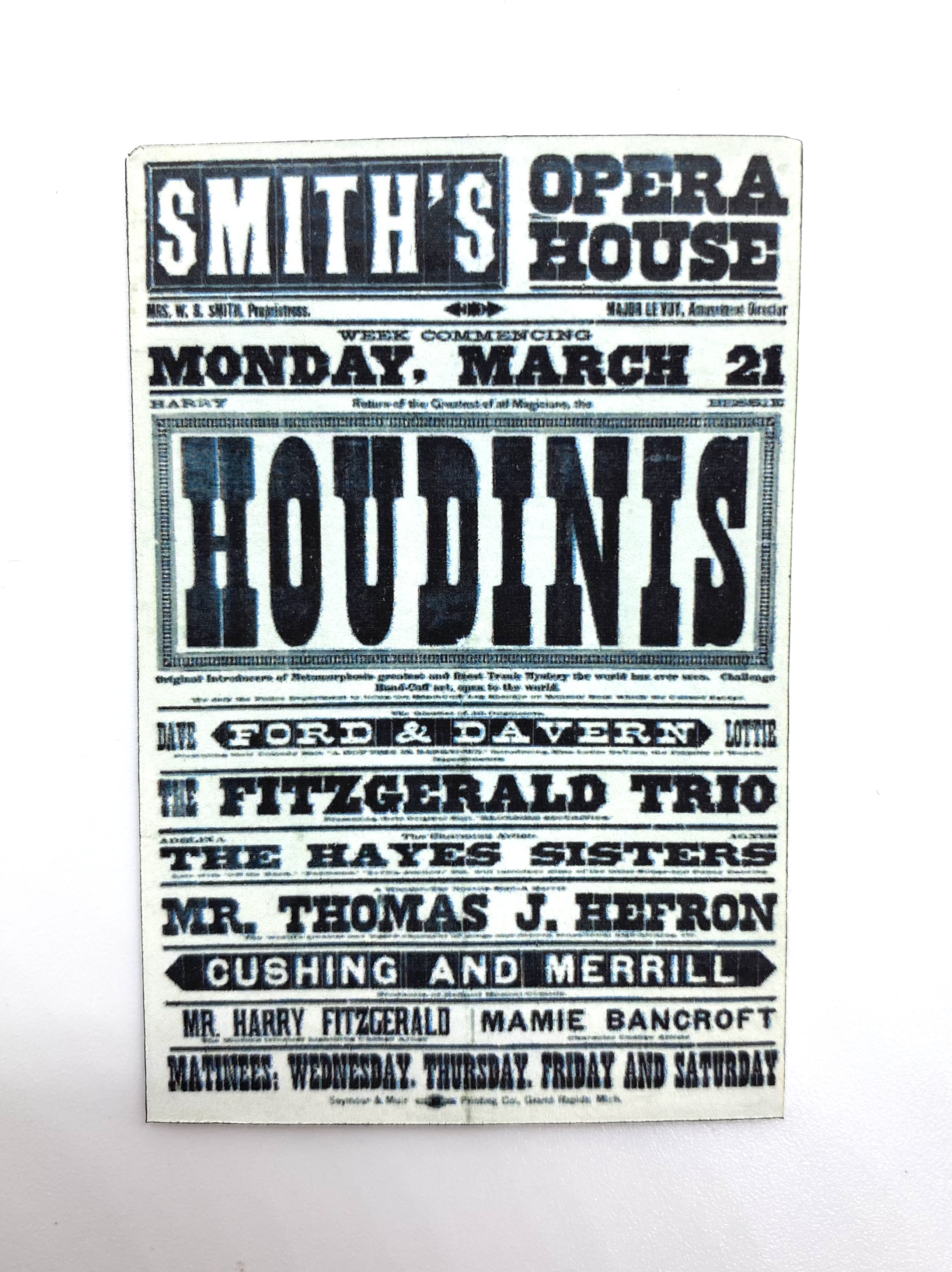
- Houdini at Smith’s Opera House. This probably won’t end up on display as Smith’s Opera House is actually in Geneva, Ontario County, New York. It was first opened in 1894, and Harry Houdini appeared there in 1898 (when 21 March was indeed a Monday).
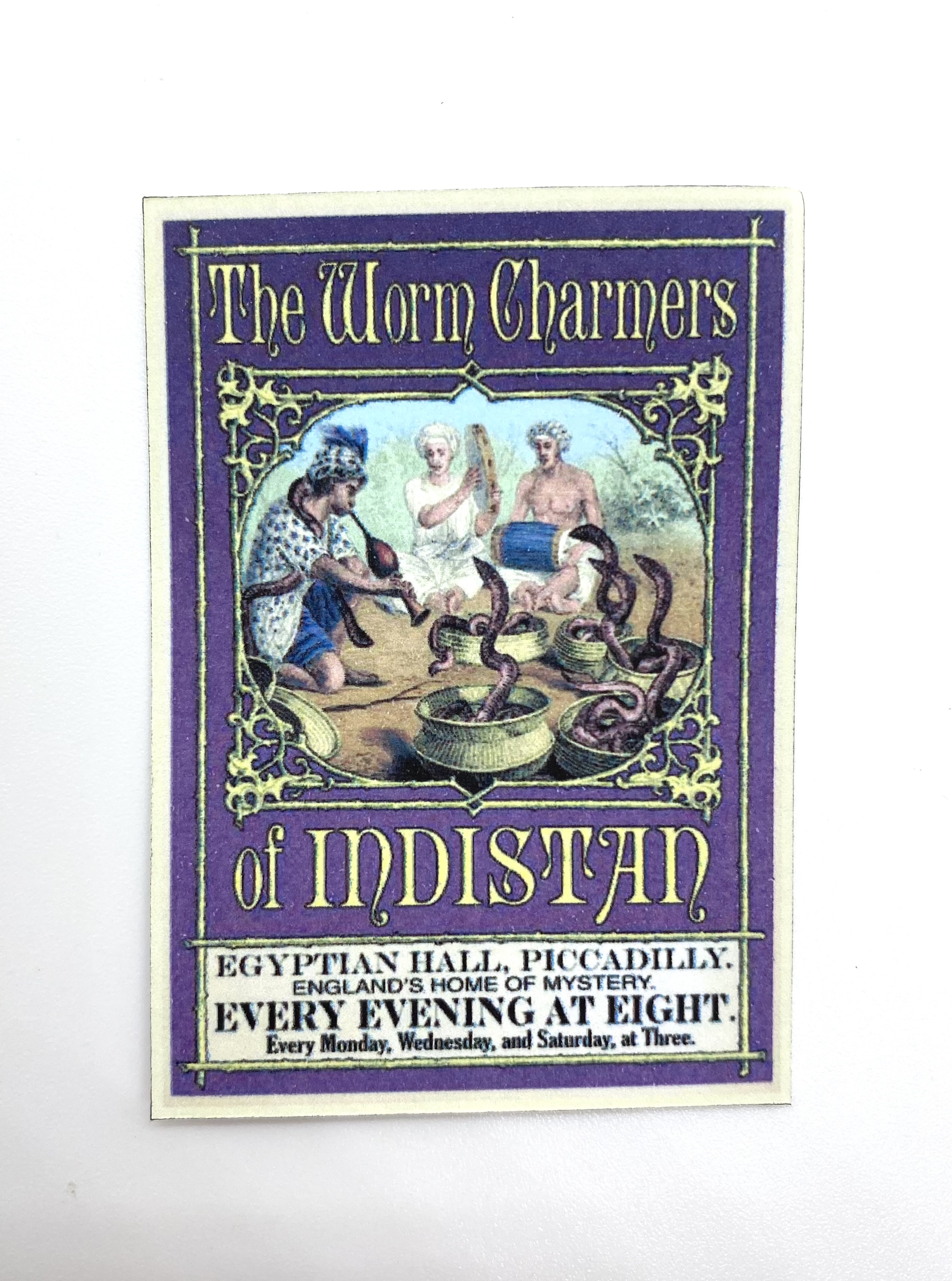
- The Worm Charmers of Indistan, Egyptian Hall Piccadilly. While the Egyptian Hall was indeed a real place, pulling in the crowds from 1812 until 1905, I can’t find any record of the Worm Charmers except in website related to The Insect Circus and, bizarrely, Grace Gilmore’s 2015 children’s story The Big City.
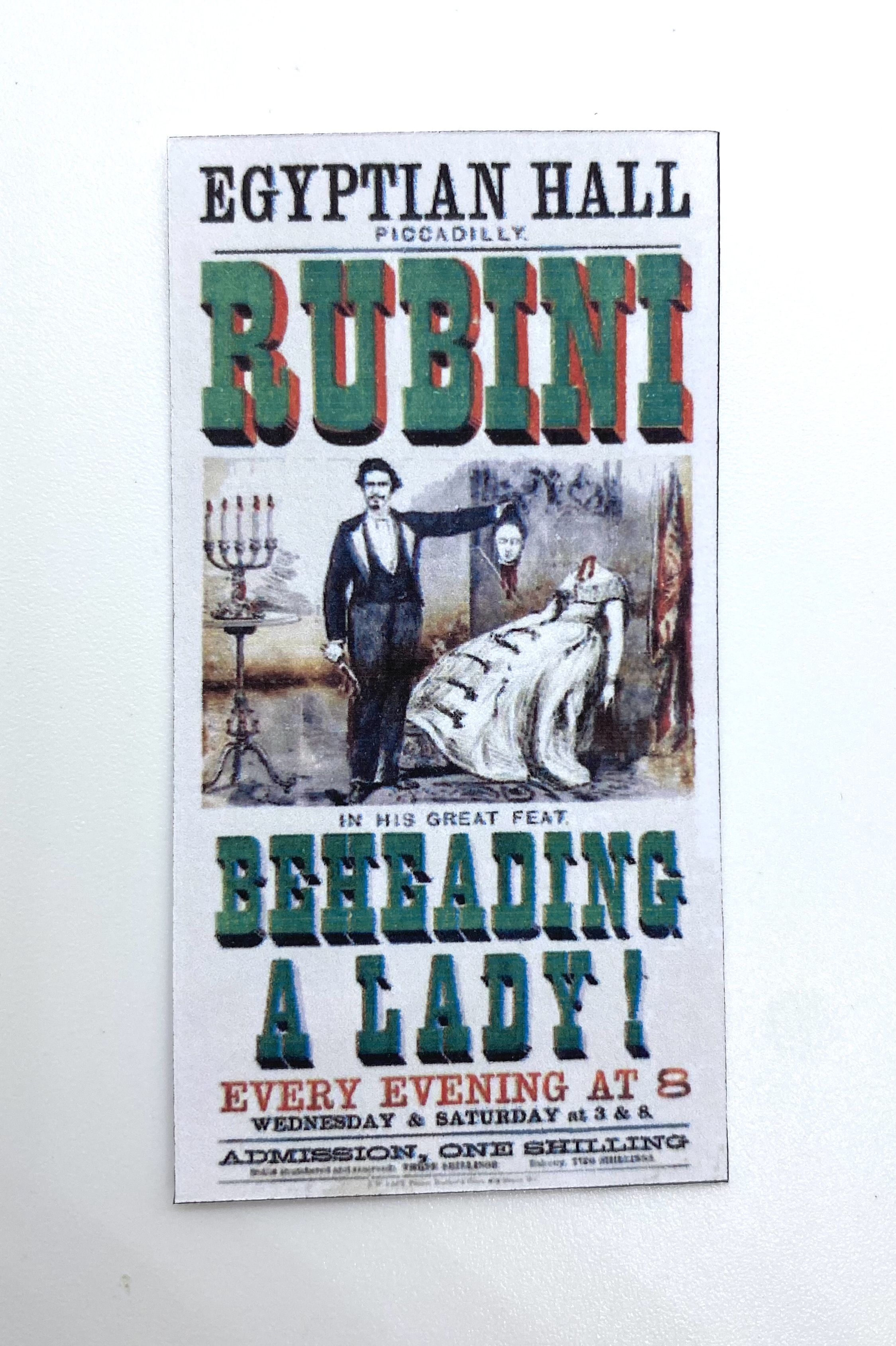
- Rubini Beheading a Lady! This really did happen (well, one hopes that the beheading didn’t, if only for the sake of the lady who endured it ‘every evening at 8’). Disappointingly, but perhaps inevitably, the grandly named Signor Rubini was not Italian, but in fact was born Philip Prentice Anderson (1844-1920), the son of a Scottish magician. He performed this act in 1867 although, as the date isn’t shown on the poster, I think we can get away with including it as a ‘current event’. Needless to say, something as sensational as this would be kept out of the butler’s sight, probably pinned up in the maids’ room as they discuss Rubini’s magnificent feat in awed whispers.
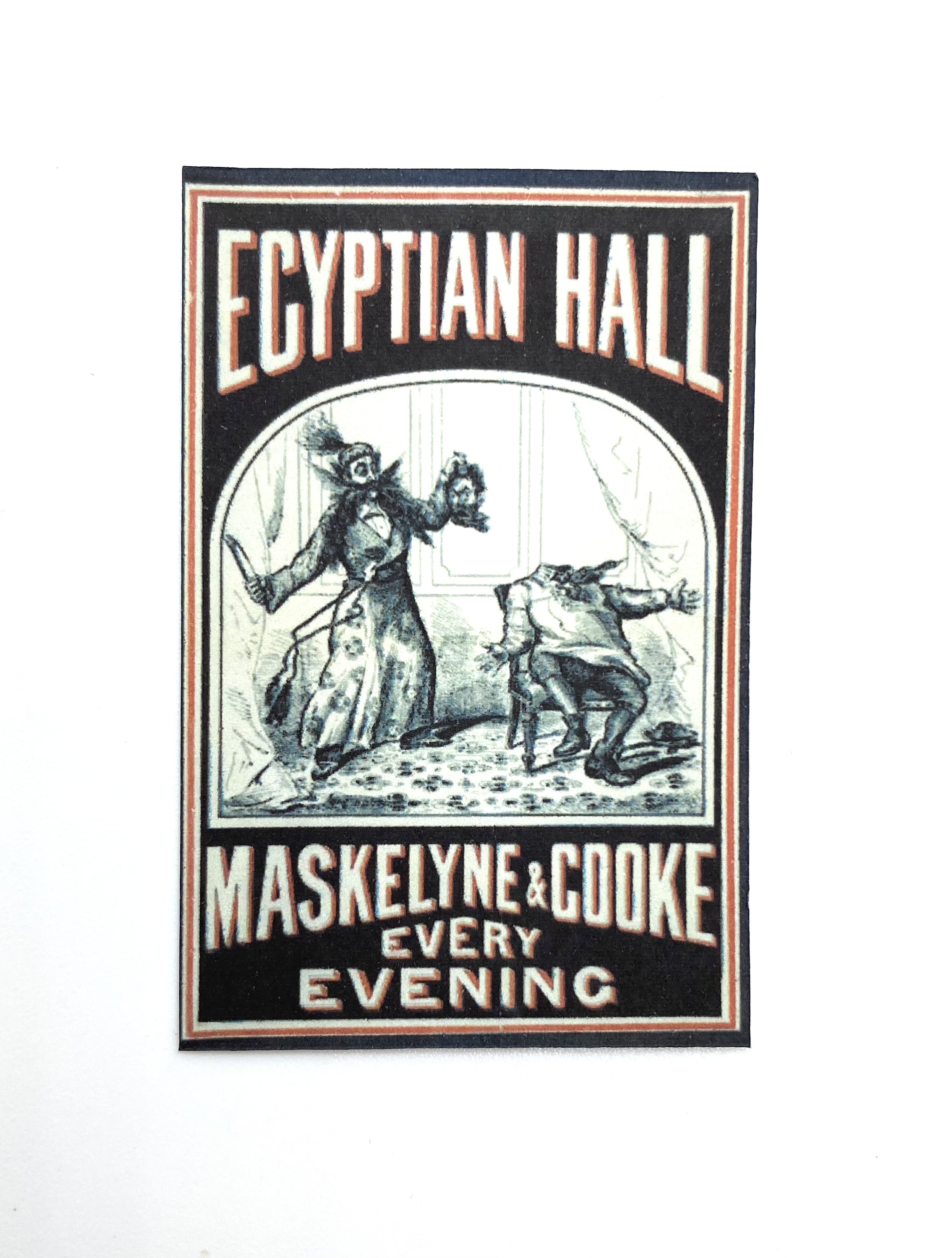
- Maskelyne & Cooke at the Egyptian Hall. This pair of magicians were in residence at the Hall on Piccadilly for 31 years, from 1873 until 1904, so the Quartermaines or their servants may well have gone to see them. John Nevil Maskelyne (1839-1917) is now known not only for creating a series of iconic tricks, but also for his role as the inventor of the pay toilet. His older colleague was George Alfred Cooke (1825-1904), and together they were famous for offering their audiences ‘all that was best and newest in English and Continental conjuring’. With so enduring and popular an act, even the butler could hardly disapprove, and so this poster is probably tucked somewhere in the Servants’ Hall.
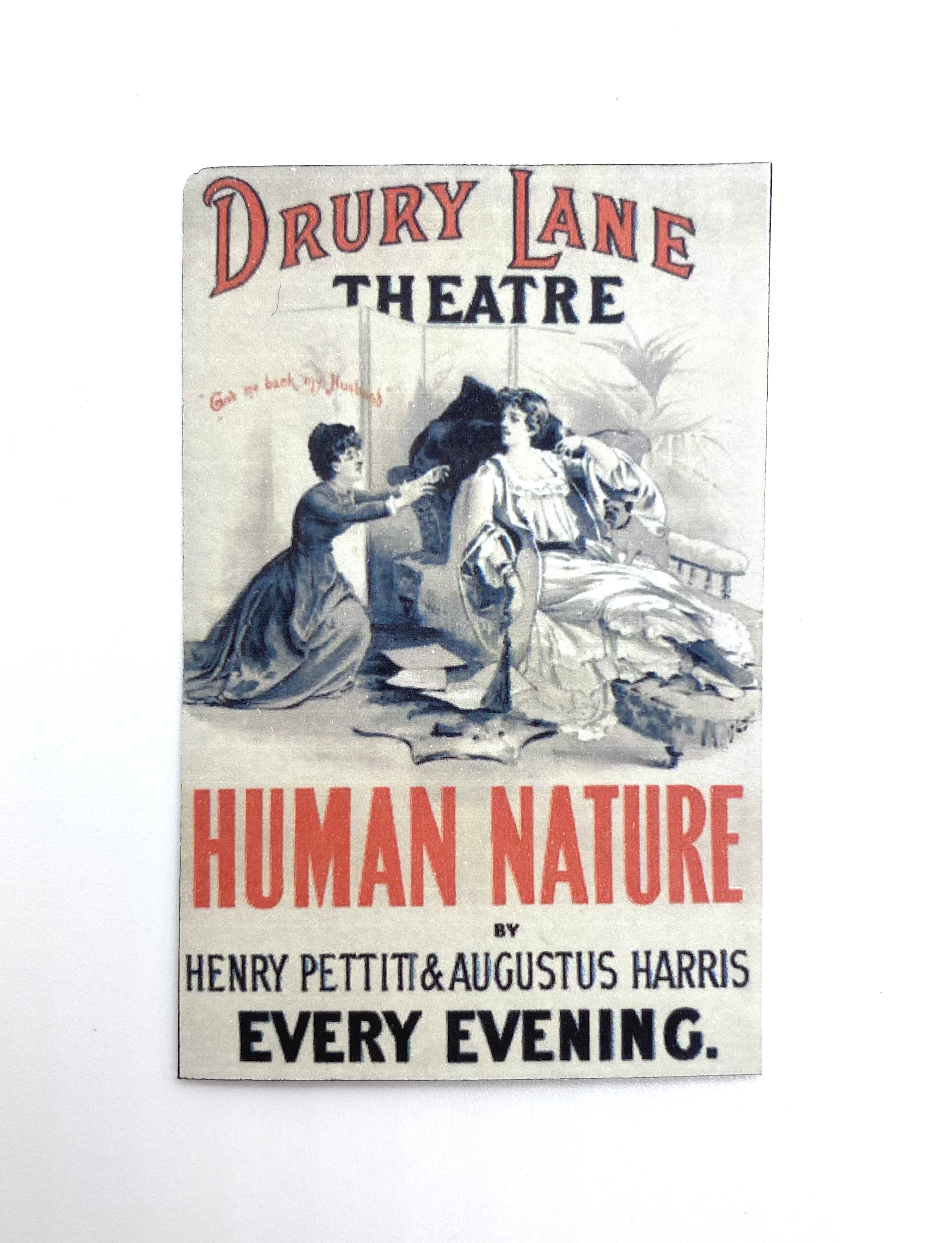
- Human Nature by Henry Pettitt and Augustus Harris, every evening at Drury Lane Theatre. The play was first produced on 12 September 1885, recently enough for us to pretend that it’s current for Quartermaine Hall. The virtuous Mrs Temple takes in her old school-friend Cora while Captain Temple is away at the wars, unaware that Cora has lived a wicked life and, in fact, was Captain Temple’s former mistress. Seeking revenge, Cora falsely accuses Mrs Temple of adultery and has her child taken from her; but in the final act Captain Temple realises the truth, throws Cora out, and is reunited with his long-suffering but faithful wife. Despite the melodramatic poster, the play has an appropriately moral message and so neither the butler nor housekeeper can find fault with it.
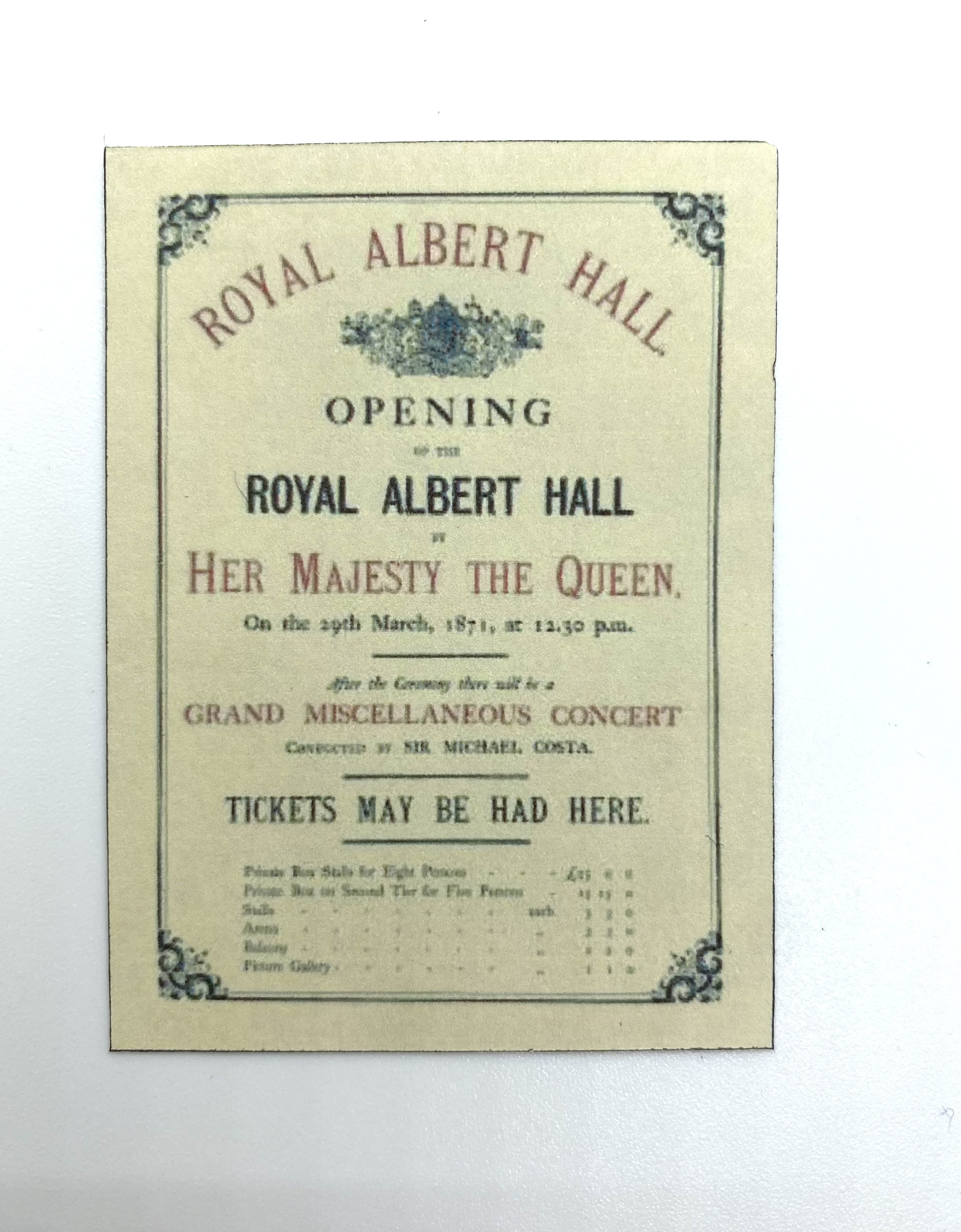
- Opening of the Royal Albert Hall on 29 March 1871. Needless to say, this really did happen, and this poster is proudly displayed in the Butler’s Pantry. While the butler would not have attended this himself, he probably knows someone who worked at the Hall and was able to save him a copy of the poster.
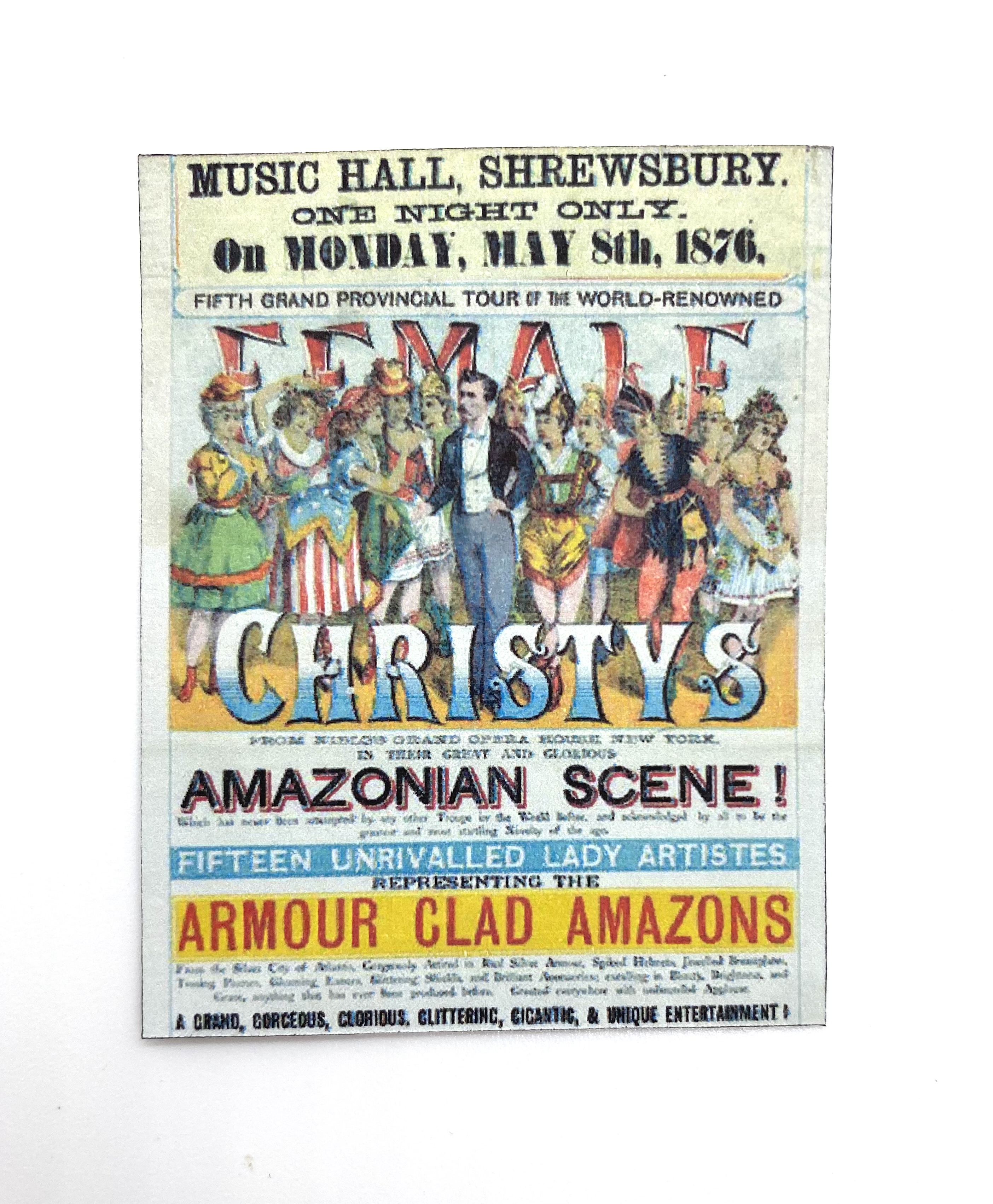
- Female Christy’s Amazonian Scene! Mythological glamour came to Shrewsbury Music Hall on 8 May 1876, and the housekeeper still cherishes the memory of the event: the final time she walked out with her beau before family circumstances forced her into service. This poster comes from the fifth ‘grand provincial tour’ of this ‘world-renowned’ troupe, featuring ‘fifteen unrivalled lady artistes representing the armour clad Amazons’. (The troupe had been reduced to twelve unrivalled lady artistes by 1882, when they performed in South Shields Public Library Hall as part of their eighth tour.) The publicity from the South Wales Daily News of 17 October 1877 gives some idea of the impact of the performance:
‘ARMOUR CLAD AMAZONS Of the Silver City of Atlantis! A BEVY OF BEAUTY! … Gorgeously attired in real silver armour, spiked helmets, jewelled breastplates, tossing plumes, gleaming lances, glittering shields, and brilliant accessories. A climax of unequalled magnificence… Greeted everywhere with unbounded applause. A Grand, Gorgeous, Glittering, Gigantic, and Unique Entertainment’.
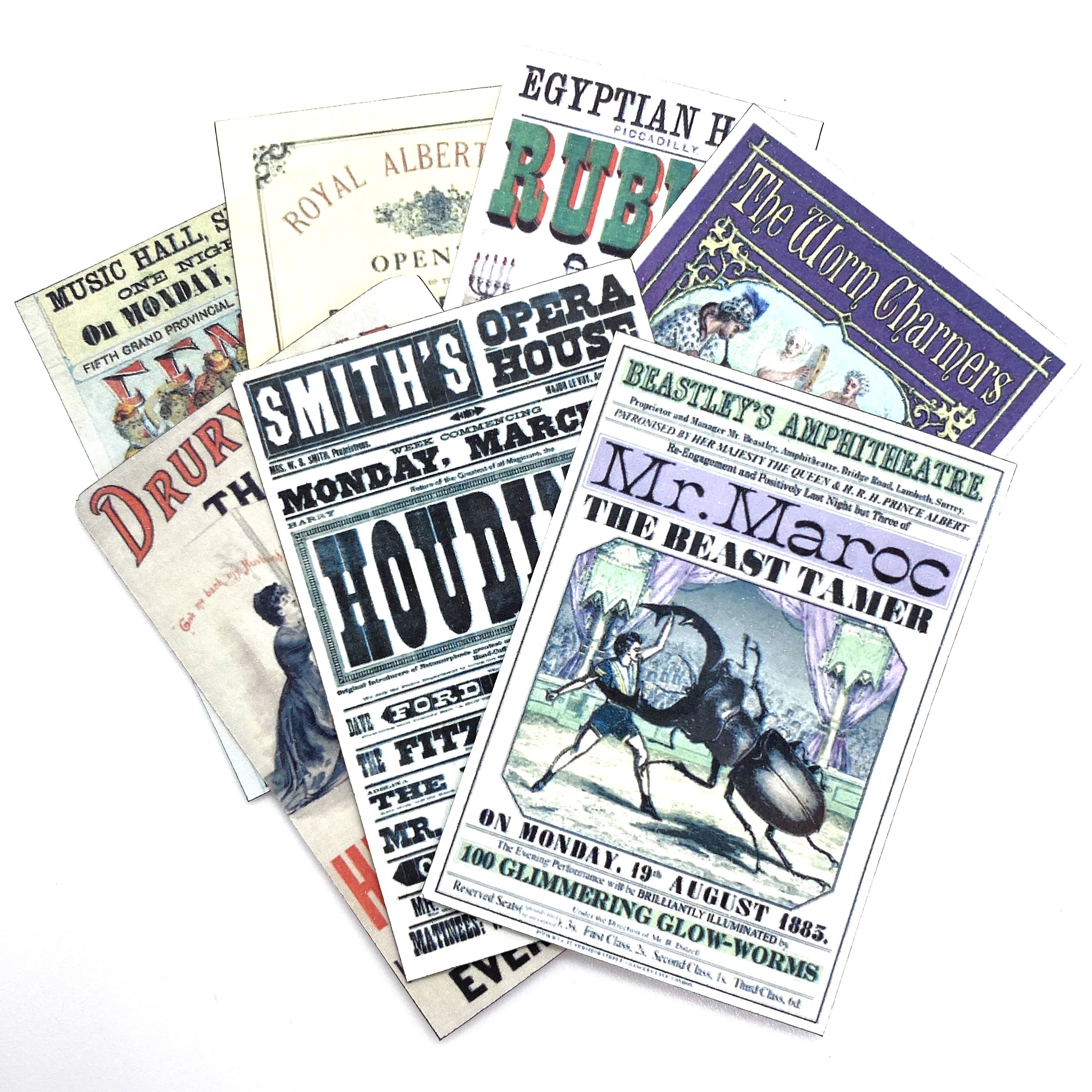
The sheaf of posters seen from the front and the back
 Quartermaine Hall
Leave a comment